
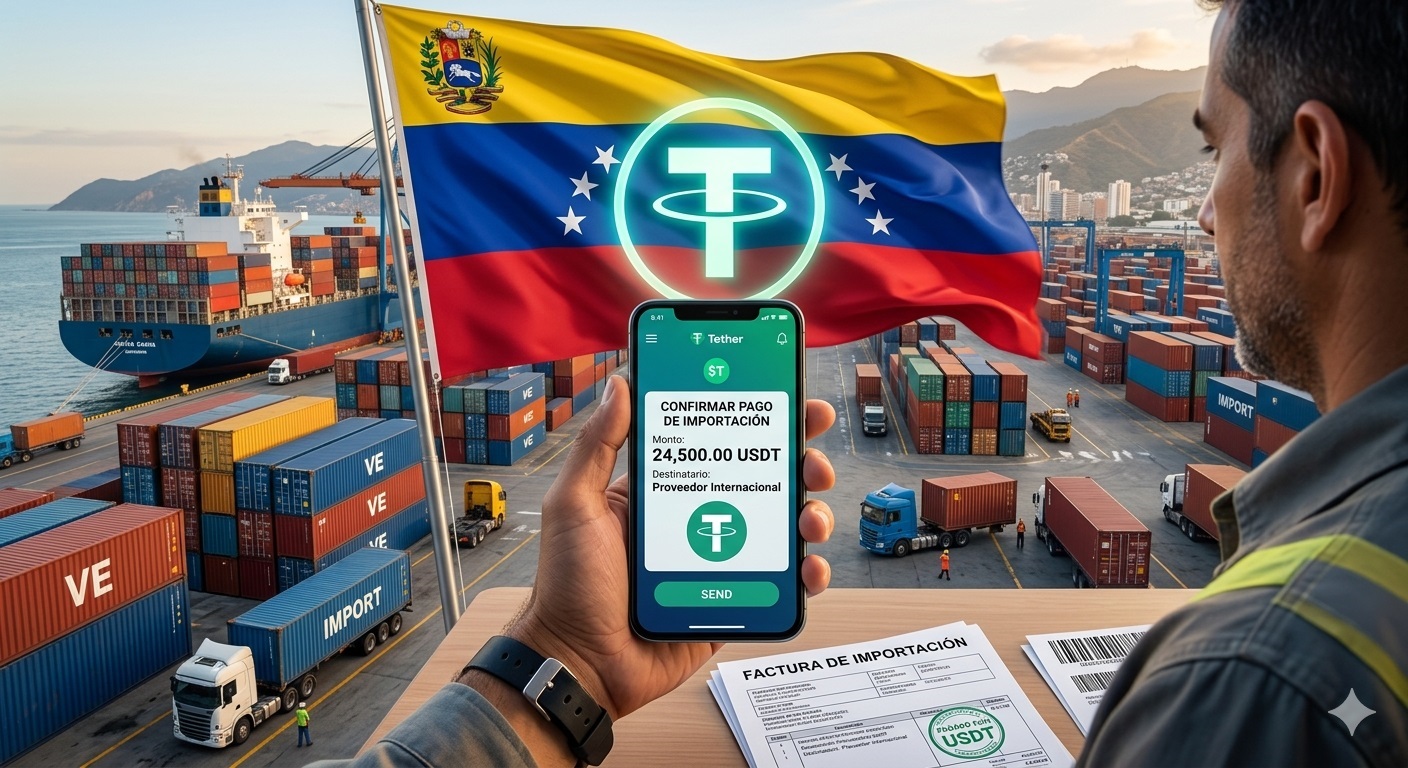
For a long time, importing goods into Venezuela has been a complex process due to customs procedures, logistics, and payment difficulties; traditional bank transfers are often slow, expensive, and sometimes rejected by the intermediary bank. Because of this problem, USDT became popular in Venezuela as a means of paying for imports or for international suppliers. However, before carrying out any transaction of this type, it is advisable to consider a few aspects to avoid unnecessary problems:
Verify that the supplier accepts USDT as a payment method
The first step is to confirm that the supplier accepts USDT as a payment method. Despite its usefulness and adoption in recent years, we must keep in mind that not all suppliers or exporters are familiar with cryptocurrencies or this specific stablecoin (USDT).
Therefore, before negotiating import terms, it is recommended to ask the supplier if they accept USDT and which blockchain network they use (TRC-20, ERC-20, BEP-20). If they do not accept it directly, there are alternatives, such as using a platform that converts USDT to dollars and deposits the funds into the exporter’s bank account.
Selecting the appropriate blockchain network for each payment
USDT is not exclusive to a single blockchain; it is available on multiple networks, including Tron (TRC-20), Ethereum (ERC-20), Binance Smart Chain (BEP-20), Solana, and others. Each network has its own characteristics regarding speed, fees, and compatibility.
When paying for imports from Venezuela, the Tron (TRC-20) network is usually the most recommended for two main reasons:
-Very low fees, generally less than a few dollars per transaction.
-High confirmation speed, which ranges from 1 to 2 minutes.
The Ethereum network (ERC-20), while the most secure and decentralized, can have high fees during periods of congestion, making it less attractive for recurring payments.
Calculate the total cost of the transaction
A common mistake when paying for imports is focusing solely on the blockchain network fee, ignoring other associated costs. To have a complete picture, you must consider aspects such as USDT acquisition fees, withdrawal or network fees, and the exchange rate spread applied by the platform.
It is recommended to simulate a small transaction before making the final payment or request a detailed breakdown of all fees from the platform. This will help avoid “surprises” or additional import costs.
Manage the documentation for customs clearance
Even if payments are made with USDT, customs require the proper documentation to support the import: a commercial invoice, a packing list, and a customs declaration.
It’s worth noting that blockchain transactions create a public record, known as a transaction hash, that serves as proof of payment. This code can be presented to customs as supporting documentation for the transaction.
Choosing a Reliable and Liquid Platform
For imports, it’s vital to select a provider with robust security measures (such as two-factor authentication and cold storage), sufficient liquidity to execute transactions without delays, customer support in Spanish, and business hours that allow for quick issue resolution. It’s also important to research the platform’s reputation on social media, consult user reviews, or contact support with a simple question to gauge their response time and level of professionalism.
Anticipating Blockchain Confirmation Times
Although USDT is faster than a traditional bank transfer, it’s not instantaneous, as each blockchain network requires a specific number of confirmations before a transaction is considered final. For example, on the Tron network (TRC-20), between nineteen and twenty-five confirmations are typically sufficient, taking between one and two minutes.
On networks like Ethereum, processing times can be longer depending on network congestion. Therefore, it’s important to inform the provider of these processing times so they don’t expect immediate payment. A good practice is to send the provider the transaction hash as soon as the payment is processed, so they can monitor its progress.
What are your thoughts on this? Do you know of any other points to consider when paying for imports from Venezuela with USDT?
If you need to pay for imports from Venezuela with USDT, you can contact us by visiting the following link.