
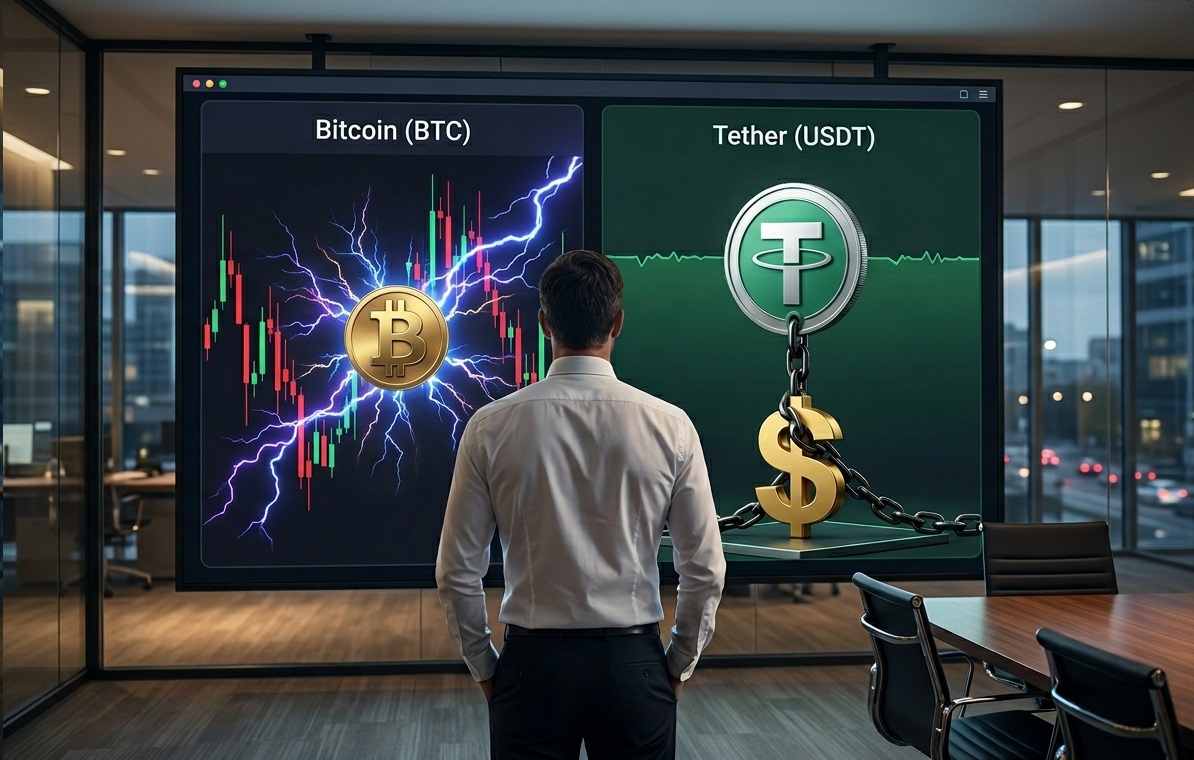
Within the digital asset ecosystem, there are two categories that every company should be familiar with: traditional cryptocurrencies and stablecoins. Although both operate on blockchain technology, their characteristics, functions, and risk profiles are very different. Below, we’ll explore the main differences between stablecoins and cryptocurrencies.
Nature and Purpose of the Asset
Cryptocurrencies like Bitcoin and Ethereum were conceived as decentralized systems for exchanging value, whose price is determined by market supply and demand. Their original purpose is to eliminate intermediaries and serve as a long-term store of value, though their prices can fluctuate significantly over short periods.
On the other hand, stablecoins like USDT were designed with a different purpose: to maintain a stable peg to a reference asset (such as the US dollar). This makes stablecoins a kind of “digital cash” that combines the speed of the blockchain network with the flexibility of fiat money, thereby facilitating everyday transactions without the risk of losing value.
Stability vs. Volatility
Volatility is the most obvious difference between the two assets. A traditional cryptocurrency can experience significant price fluctuations in a single day due to external factors, such as news, market sentiment, or speculative moves by large investors.
On the other hand, stablecoins are designed to mitigate the volatility of cryptocurrencies by providing a backing mechanism that maintains a consistent value over time. This enables users to plan their payments without worry, especially in the face of uncertainty or sudden fluctuations in their assets.
Backing Mechanisms and Transparency
Decentralized cryptocurrencies do not depend on physical backing or a central issuing entity, as their value is based on the mathematical security of their network and the collective trust of their users. Because of this, there is no reserve of dollars or gold to guarantee the price of Bitcoin or Ethereum; however, this factor contributes to their high volatility in financial markets.
On the other hand, stablecoins like USDT maintain reserves in highly liquid assets, such as US Treasury bills or cash deposits, and publish periodic reports prepared by independent firms detailing the composition of these reserves, providing greater transparency in their operations.
Business Use
While traditional cryptocurrencies have gained popularity as long-term investment instruments, their usefulness in business or commerce is limited by their price volatility. For this reason, few companies or organizations are willing to accept payments in cryptocurrencies, which could devalue before conversion to local currency.
On the other hand, stablecoins are more widely accepted in the commercial, business, and institutional sectors because their prices are pegged to other fiat currencies (such as the US dollar), providing greater stability and confidence. This allows companies to settle invoices with international suppliers in minutes, at lower fees than traditional transfers and without the restrictions often imposed by traditional intermediary banks.
Transaction Speed and Cost
The speed at which a transaction is confirmed and the associated fees vary significantly between cryptocurrencies and stablecoins. Networks like Bitcoin can take anywhere from several minutes to hours to validate a block or transaction, and fees fluctuate unpredictably depending on network congestion, making them difficult to use for quick or urgent payments.
Stablecoins, on the other hand, typically operate on more modern and scalable networks like Tron, where a typical USDT transaction is confirmed in less than 2 minutes, and fees are very affordable, rarely high. This combination makes stablecoins the preferred option for daily business operations, increasing their popularity in markets where financial agility is a competitive advantage.
What are your thoughts on this topic? Do you know of any other differences between stablecoins and cryptocurrencies?
If you are interested in international payments with stablecoins, you can contact us by visiting the following link.